We Know the Rules, But Who Shows Us the Way? (Mentorship, Pressure, and the Realities of Legal Practice in Ghana)
[*] For readers familiar with the popular Harry Potter series, Albus Dumbledore serves as a mentor figure to Harry Potter, offering guidance through carefully timed questions, trust, and space for independent judgment rather than constant instruction. The reference is used here to illustrate the often understated but formative role of mentorship in shaping decision-making.
Two Young Lawyers
Two young lawyers are called to the Bar in the same year. They have similar academic backgrounds, similar ambitions, and the same sense that they are ready to begin.
A few years into practice, their paths begin to diverge. One is careful. He develops a habit of pausing to think through decisions, especially when situations are uncertain or do not feel right, and he asks questions. The other moves faster. He takes instructions as they come. He focuses on delivering and does not always stop to interrogate the situation in front of him.
Both are capable and hardworking, but over time, their approaches begin to shape the kinds of decisions they make.
At some point, one crosses a line, not necessarily because he does not know the rules, but because, in that moment, the pressure of the situation outweighs the clarity of those rules.
Over time, the role that mentorship plays in shaping those decisions becomes clear.
One found a senior lawyer who took an interest in his development. This was not formal, as there was no structured mentorship program, but through conversations. After meetings, the senior would ask, “Why did you take that position?” or “What would you do if the client pushed further?” The discussions were a hybrid of real law work and judgment.
The other did not have that same experience, and that difference matters more than we often admit.
This article builds on a subject I first explored in my final paper during my LLM: “Rethinking Mentorship in Big Law: Prioritizing Well-Being, Ethical Guidance, and Associate Support.”Although it was framed within the context of large firms in the USA, it feels just as relevant in the Ghanaian legal space.
Knowing the Rules Is Not the Same as Applying Them
We often assume that once lawyers are taught the rules, they will know what to do with them. However, in reality, that transition is not always straightforward.
The idea of mentorship is not new. In many ways, it mirrors what we see in familiar narratives. In the Harry Potter series, Albus Dumbledore is not simply a source of knowledge. He does not stand beside Harry at every moment or provide ready-made answers. Instead, his role is more subtle. He creates space for Harry to think, to question, and at times to struggle, while offering guidance that shapes how he approaches difficult decisions.
Legal practice is not very different: Knowing the rules is one thing, and knowing how to apply them in moments of uncertainty is another.
“The issue is not only that students and young lawyers learn the rules. It is that they are often left to figure out how to apply them without guidance.”
How We Train Lawyers in Ghana
We train lawyers in stages, but at each stage, there is a gap between what is taught and what is eventually required in practice.
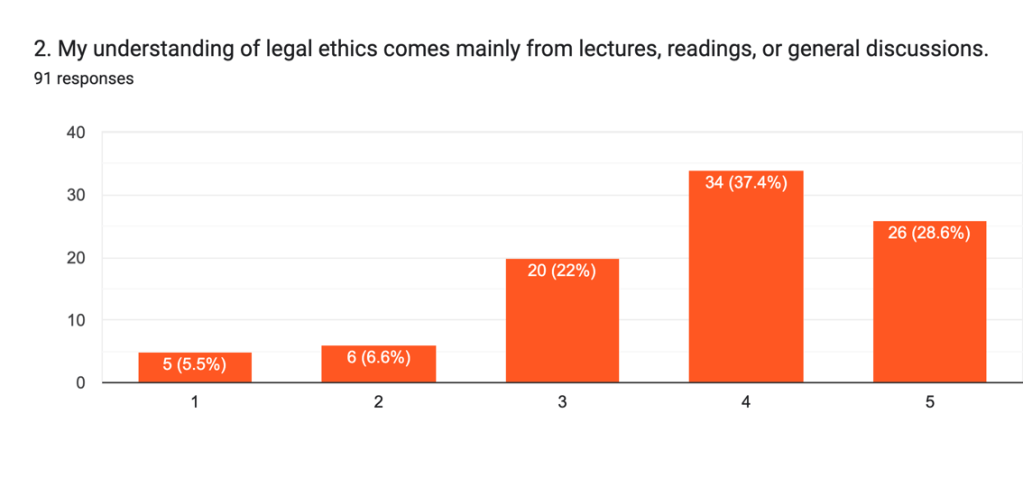
At the LLB level, students are introduced to the structure of the law. They learn principles, cases, and doctrine, often with very limited exposure to the realities of legal practice. Their understanding of what it means to be a lawyer is shaped largely by lectures, observation, and assumptions. For many, there is an underlying expectation that the profession’s practical aspect, including professional responsibility, will become clearer at a later stage.
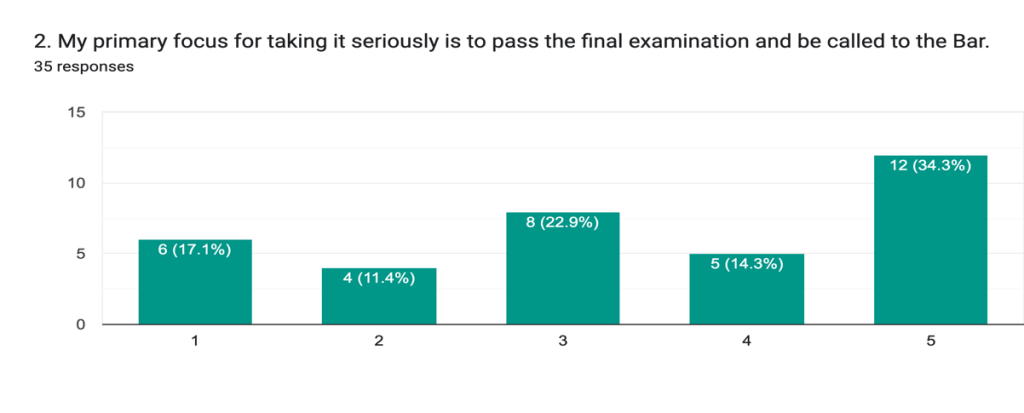
At the professional course level, ethics is taught formally. Students study the rules that govern professional conduct and are examined on them. In practice, however, the focus is often on mastering the material well enough to pass. Even where there is an intention to instil discipline, students at that stage are primarily concerned with being called to the Bar. Ethical rules are understood, but not always internalised in a way that prepares them for the complexity of real situations.
By the time practice begins, much of that knowledge sits in the background, and what comes to the fore instead are the demands of the profession.
The Pressures We Do Not Talk About
Practice introduces a different set of pressures.
In Ghana, success in the legal profession is often expected to be visible. There is an unspoken understanding that a lawyer should “look the part”: look a certain way, live a certain way, and project a certain level of achievement. Basically, the car, the suit, and the lifestyle. For many young lawyers, the pressure to meet that expectation starts quite early in their careers.
Some respond by trying to move quickly. They set up firms at a stage when they are still developing their skills. They take on matters that they are not fully prepared for. They make decisions without the benefit of experience or sustained guidance.
In larger firms, the pressure takes a different form. Billable hour targets, demanding clients, and hierarchical structures shape how young lawyers work and how quickly they are expected to deliver. There is often little space to pause, and even less room to ask questions.
The pressures of practice tend to emerge before young lawyers develop the judgment required to navigate them confidently.
“There is an unspoken understanding that a lawyer should “look the part”… Basically, the car, the suit, and the lifestyle.”
When Mentorship Is Left to Chance
Mentorship within the legal profession is often informal and uneven. Some lawyers find senior colleagues who are willing to guide them, create space for questions, and involve them in thoughtful discussions. Others do not have that experience and are left to navigate practice largely on their own, using the “trial and error” approach.
Where mentorship is absent or inconsistent, learning happens through experience, and sometimes through mistakes that could have been avoided. Over time, this shapes how lawyers respond to uncertainty, pressure, and ethical tension.
What the Responses Are Telling Us
A short anonymous survey conducted for this article reflects similar patterns across different stages of legal training and practice.
Responses were received from LLB students, students at the Ghana School of Law, and practising lawyers, with over 90 responses coming from LLB students alone. While the questionnaires for LLB and Ghana School of Law students were largely similar, the responses reveal a progression that is worth noting.
LLB Students
Many indicated that their understanding of legal practice is still largely shaped by academic exposure and observation.
There is a general expectation that key aspects of professional responsibility and decision-making will be learned later, particularly during professional training or in practice.
Students at the Ghana School of Law
Responses suggest that while ethics is formally taught, the emphasis remains largely on examination.
Many acknowledged that they are familiar with the rules governing professional conduct, but fewer felt confident about applying those rules in complex or uncertain situations. The transition from theory to practice remains, for many, an area of uncertainty.
Practising lawyers
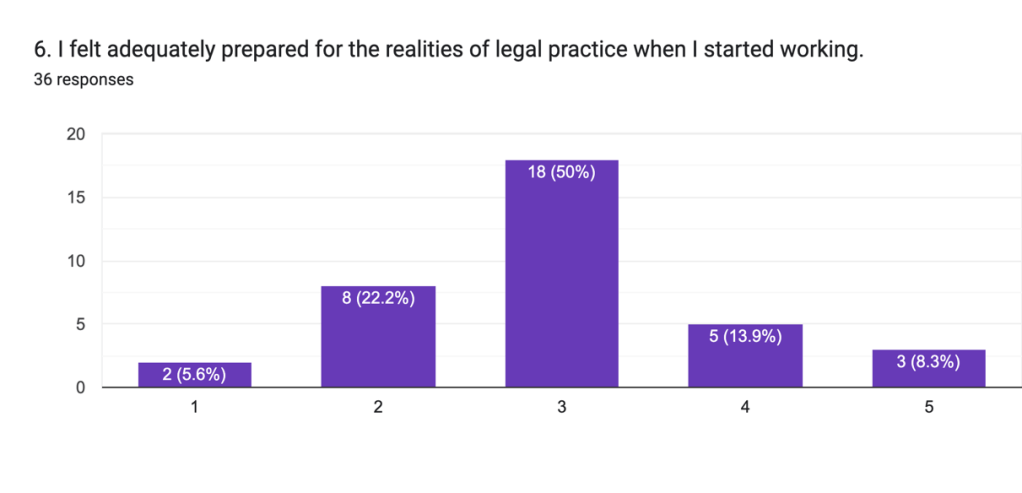
While most indicated that they had studied and understood ethical rules during the professional law course, a significant number did not feel fully prepared to navigate ethical dilemmas at the start of their careers.
Across all three groups, these responses suggest a fairly consistent trajectory: at each stage, there is an expectation that practical judgment will be developed at the next stage. In reality, that expectation is often carried forward into practice, where the need for that judgment becomes immediate.
What People Wish They Knew Earlier
Beyond the structured responses, participants were invited to reflect on what they wish they had better understood about legal practice at their respective stages. The responses, across LLB students, Ghana School of Law students, and practising lawyers, reveal some recurring themes.
A recurring theme is the gap between theory and practice.
LLB students repeatedly pointed to the difficulty of understanding how legal principles translate into real situations. Many expressed uncertainty about basic aspects of practice, including court proceedings, client interaction, and the day-to-day work of a lawyer.
This theme continues at the Ghana School of Law in a more refined form. Students identified key areas such as advocacy, procedure, client management, and legal ethics as areas where they would have preferred more practical engagement. Notably, while ethics is formally taught at this stage, it still appeared among the areas students felt least confident about.
Among practising lawyers, the reflections shift toward navigating the realities of the profession. They highlighted the need to better understand financial expectations, stress, workplace dynamics, fee structures, and early career decisions.
Across all three groups, the need for guidance is a recurring theme. Some responses stated this directly, noting that lawyers need to be more intentional about mentoring. Others pointed to specific areas where guidance would have made a difference, particularly in handling ethical uncertainty and professional relationships.
Taken together, these reflections reinforce a central point: young lawyers are often required to make decisions, sometimes significant ones, before they have had the benefit of sustained guidance on how to approach them.
“I wish I better understood how lawyers navigate ethical grey areas in practice…” (LLB Student)
Rethinking Mentorship Intentionally
If legal practice involves uncertainty, pressure, and ethical tension, why do we continue to treat mentorship as optional?
There is a strong case for more structured and intentional mentorship at each stage of legal training and practice.
At the LLB level, this may take the form of greater exposure to the realities of practice through structured conversations, practical examples, and interaction with practitioners.
At the Ghana School of Law, mentorship can complement the teaching of legal ethics by grounding rules in real scenarios and lived experience. Mandatory internships present a perfect opportunity for this.
In practice, mentorship should not be left to chance. It should be more intentional, with clearer expectations and more consistent engagement. Structured systems such as buddy programmes for interns and junior lawyers (which some firms already use), regular check-ins, and intentional mentor pairings can make a significant difference.
Young lawyers need to understand how the rules operate in situations that are not straightforward, where there is pressure to act quickly, or where competing considerations are not easily resolved.
In many ways, this reflects the role Dumbledore played: not providing constant supervision but giving timely guidance, and not giving answers but providing direction.
“I wish lawyers were more intentional about mentoring.” (Practising Lawyer)
Finding Mentorship and Making It Work
Mentorship matters at the points where judgment is formed. The question is: where does it come from, and who is responsible for making it work?
Part of the answer lies with institutions, but part of it also lies with individuals, both those seeking guidance and those in a position to offer it.
For Students and Young Lawyers
Mentorship is not always formally assigned. In many cases, it is found.
At the LLB level, this may begin with paying closer attention to the practitioners who engage with students, whether through lectures, guest sessions, internships, or moots. Reaching out does not always require a formal request. Sometimes it starts with a question, a follow-up conversation, or simply showing a sustained interest in how the work is done.
At the Ghana School of Law and in the early years of practice, the opportunities become more immediate. Senior colleagues, internship supervisors, and even slightly more experienced peers can all play a role.
Maximising mentorship requires intention. It means asking the questions that are not always asked openly:
How do you approach difficult clients?
What do you do when something does not feel right?
How do you think through decisions when the answer is not obvious?
It also requires consistency. Mentorship is rarely built in a single interaction: it develops over time through repeated conversations, observation, and reflection.
For Senior Lawyers, Lecturers, and Professors
Again, mentorship does not always require a formal structure to begin, but it does require intention.
For lecturers and professors, this may mean going slightly beyond doctrine by creating space to connect what is taught to how it plays out in practice. This also includes making themselves accessible beyond lectures, including through office hours.
For senior lawyers, mentorship often happens in moments that may seem routine: a conversation after a meeting, feedback on a draft, or a question that pushes a junior to think more critically.
These moments shape how young lawyers approach judgment, responsibility, and professional conduct.
For Institutions Within the Profession
Institutions such as the General Legal Council and the Ghana Bar Association, including the Regional Bars, are well placed to shape how mentorship is approached. This could take the form of structured mentorship programmes, pairing young lawyers with experienced practitioners, or creating platforms for sustained engagement beyond formal events.
Faculties of law also have a role to play by introducing structured interaction with practitioners, building mentorship networks, and creating more opportunities for students to engage with the realities of practice.
Some firms have already taken steps in this direction through buddy systems and internal mentorship frameworks for interns and junior lawyers. If applied more consistently, these models can provide a level of support that is currently uneven across the profession.
Professional Misconduct and the Mentorship Gap
Across training and practice, a pattern emerges: students learn the rules and pass examinations, then enter practice expecting clarity to come with experience. What they encounter instead are situations that require judgment, often without sustained guidance.
The conversation about professional misconduct often begins at the point of failure. However, misconduct is not always the result of a disregard for the rules. In some cases, it reflects the absence of guidance at critical moments.
This does not remove personal responsibility. It does, however, raise an important question about whether existing structures adequately support the development of judgment.
Mentorship, in this context, is therefore about creating space for questions that are rarely asked openly and making room for reflection in a profession that often rewards speed and output in addition to career progression. It is also about ensuring that young lawyers are not left to navigate ethical uncertainty alone, particularly in environments where the cost of getting it wrong can be high.
The legal profession places significant emphasis on knowledge, competence, and performance. If we accept that pressure and ambiguity are part of legal practice, then mentorship must become part of how the profession understands training, development, and responsibility.
“However, misconduct is not always the result of a disregard for the rules. In some cases, it reflects the absence of guidance at critical moments.”
Not Every Lawyer Meets a Dumbledore
Not every lawyer will find a Dumbledore: their version of a guiding figure who takes a deliberate interest in their development. Yet, where that kind of guidance exists, it often shapes both competence and judgment. At critical moments, mentors do not provide all the answers, but they ask the right questions and influence how decisions are made.
Appendix: Survey Insights and Selected Responses
This article draws on responses from short anonymous surveys conducted among LLB students, Ghana School of Law students, and practising lawyers. The surveys explored perceptions of legal practice, preparedness for ethical decision making, and access to mentorship. The responses provide a useful snapshot of common experiences that support the broader argument on the role of mentorship in legal practice.
A. Overview of Participants
Total respondents: 162
LLB students: 91
Ghana School of Law students: 35
Practising lawyers: 36
B. Key Themes Across All Groups
Persistent gap between theory and practice
Limited confidence in applying ethical rules
Strong demand for practical exposure
Lack of structured and intentional mentorship
Uncertainty around career direction and early professional decisions
C. Selected Responses
The Theory–Practice Gap
“I wish I understood how legal principles are applied in real-life practice…” (LLB Student)
“Procedure generally seems to be too theoretical rather than practical.” (Ghana School of Law Student)
“Understanding how the court system works in practice.” (Practising Lawyer)
Ethical Uncertainty and Professional Responsibility
“I wish I better understood how lawyers navigate ethical grey areas in practice…” (LLB Student)
“Ethics.” (Ghana School of Law Student)
“Early mistakes and the challenges one is likely to face as a young lawyer.” (Practising Lawyer)
Practical Skills and Exposure
“Basic court proceedings and client interactions.” (LLB Student)
“The administrative process like filing documents and service.” (Ghana School of Law Student)
“More hands-on practice and exposure.” (Practising Lawyer)
Career Direction and Professional Identity
“The various areas of practice beyond litigation and what they entail.” (LLB Student)
“Navigating options for my legal career.” (Ghana School of Law Student)
“I wish someone had guided me on the right paths to take after law school in terms of which firm or company to work with.” (Practising Lawyer)
Career Direction and Professional Identity
“Generally, how the practice works. It looks like a lot of mentoring happens before the practice.” (LLB Student)
“MENTORSHIP.” (Ghana School of Law Student)
“How to handle the stress and imposter syndrome.” (Practising Lawyer)
For transparency and further engagement, anonymised responses from each group can be accessed below:
These responses are not exhaustive, but they point to a consistent pattern across the different stages of legal training in Ghana. The issue is not only that students and young lawyers learn the rules but that they are often left to figure out how to apply them without guidance.
A woman from the town of Jillig Number 2, near the Gambaga witch camp, was accused of witchcraft after a child in her community fell ill. The illness was blamed on a bat that had flown over the child. A mob concluded that the woman was responsible. She was beaten until she lost consciousness and then set on fire. She died, leaving behind three children aged 11, 9, and 7. “These children have no mother, and their father has already died,” said the town chief. “These children can no longer do anything. They have no mother. They have no father. It has been left in my hands to make sure they get some daily bread. We have these orphans without anything to support them.”[1]
Witch camps in Ghana are informal settlements, primarily in the Northern Region, that serve as homes for individuals, mostly elderly women, accused of witchcraft.[3] These camps, located in towns such as Gambaga[4], Kukuo[5], and Gnani[6], have become semi-permanent homes for hundreds of women who have been exiled from their communities following accusations of witchcraft.[7] As of 28th July 2023, a report indicated that about 539 people lived in these camps.[8] Allegations of witchcraft are deeply rooted in cultural and spiritual beliefs. They are often spurred by unexplained illnesses, deaths, or sheer misfortune that happen in a town or to a family member. Once accused, women are forced to choose between fleeing to a camp or facing violence in their communities.
Ghana is not unique. Across parts of Africa, Asia, and the Pacific, women accused of witchcraft face violence, exile, and death. In Tanzania, elderly women have been killed after being accused of causing misfortune.[9] In Nigeria, both women and children have been subjected to abuse following accusations by religious figures.[10]
The continued existence of witch camps in Ghana represents a violation of human rights norms, both at the national and international levels, particularly those related to the rights of women and girls to live free from violence, discrimination, and harmful traditional practices.
2.0 Historical, Cultural, and Social Roots of Witchcraft Accusations
Belief in witchcraft in Ghana dates back centuries and is heavily influenced by traditional belief systems. It is used to explain misfortunes, such as crop failure, death, or disease.[11] In precolonial and colonial periods, belief in witchcraft was interwoven with indigenous religious practices and social control mechanisms.[12]European colonists and missionaries reinterpreted these belief systems and used the term “witchcraft” to describe the indigenous African religious beliefs and rituals they saw.[13] Colonialism, Christianity, Islam, and other religions have all influenced Ghanaian notions about witchcraft.[14] Over time, these accusations have disproportionately targeted women, particularly elderly women, women living with disabilities, widows, or those without strong male relatives.[15]
These accusations rarely follow due process or evidence-based inquiry.[16] In the Ghanaian case of Abotchie v Nuumo, Abban J (as he then was) held that the traditional mode or method of proving witchcraft which the defendant intended to adopt had not gained any recognition in the courts of law and it should not be countenanced because the evidence which the fetish priest would offer to show that the plaintiff was a witch would be nothing but hearsay and therefore inadmissible.[17]
Accusations of witchcraft are rather based on dreams, visions, rumours, or the testimonies of spiritual leaders or family members. Once an accusation is made, there is no meaningful opportunity for defence. The accused persons are left to choose between exile to a witch camp or facing violence, sometimes fatal, at the hands of their communities.
3.0 Life in Witch Camps
Witch camps are described as places of refuge, but this description masks the reality of life there – the inhabitants live in harsh conditions.[18] Women live in basic huts, with limited access to clean water, adequate food, health care, or sanitation.[19] Many depend on charity for survival.
Movement in and out of the camps is frequently restricted, either by camp authorities or by fear of attack if a woman attempts to return home. These restrictions are sold to the women and justified as protective measures, but in reality, they limit freedom of movement and amount to forced confinement. The social stigma attached to being labelled a witch continues to follow these women, even within the camps themselves.[20]
4.0 Human Rights Violations
The existence and conditions of witch camps in Ghana raise serious concerns under international human rights law. Many women there live under forced isolation, unsafe living conditions, and constant social stigma. This places Ghana in tension with several international instruments to which it has committed itself.
The treatment of women in witch camps is fundamentally inconsistent with the guarantees set out in the UDHR, which affirms that every person has the right to life, liberty, and security.[22] The environment threatens their safety, restricts their movement, and denies them access to adequate food, shelter, and health care.
The UDHR also prohibits cruel, inhuman, and degrading treatment.[23] The overcrowded and unsanitary conditions in the camps, combined with social exclusion and public stigma, create environments that strip women of dignity and subject them to both physical and psychological harm.
Convention on the Elimination of All Forms of Discrimination Against Women (CEDAW).[24]
Ghana’s obligations under the CEDAW require it to eliminate discrimination against women and challenge social and cultural practices that reinforce gender inequality.[25] Witch camps disproportionately affect women, particularly elderly women, widows, and women without strong family protection. Once accused, these women are denied access to essential services, such as access to health care guaranteed by the CEDAW, and are excluded from social and economic life.[26]
International Covenant on Civil and Political Rights (ICCPR).[27]
The ICCPR guarantees the right to liberty and security of the person.[28] Women sent to witch camps are confined without legal process, judicial review, or consent. In many cases, they cannot leave safely due to threats of violence or social retaliation. This form of confinement amounts to arbitrary detention. According to General Comment No. 35, deprivation of liberty includes any situation in which an individual is confined to a limited space without free consent, recognizing that it does not require formal imprisonment.[29]
By allowing witch camps to operate, Ghana fails to protect individuals, particularly elderly, widowed, or socially vulnerable women, from the unlawful deprivation of liberty, although the state does not formally operate the camps.
Witchcraft accusations do not affect only women. They also disrupt children’s lives. In many cases, women accused of witchcraft are forcibly separated from their children without any formal assessment of the children’s welfare. In other situations, children accompany their mothers to camps where they face unsafe living conditions, limited access to education, and social stigma.
The CRC stresses the importance of family unity[31] and requires states to protect children from physical and emotional harm.[32] The forced displacement of mothers and the exposure of children to unsafe and marginalized environments undermine these protections and place children at risk of long-term developmental harm, contrary to their best interests.[33]
Convention on the Rights of Persons with Disabilities (CRPD).[34]
Women with disabilities are particularly vulnerable to witchcraft accusations. Behaviour linked to dementia, mental illness, or other cognitive conditions is misinterpreted as spiritual cases.[35] Instead of receiving medical care or social support, affected women may be expelled from their communities and confined in witch camps.
The CRPD affirms that persons with disabilities have the same rights to liberty, security, and dignity as others.[36] The confinement of women with disabilities in witch camps signals gender discrimination, disability stigma, and social exclusion, all of which the CRPD seeks to eliminate.
5.0 Government Action and Legislative Reform
Ghana has taken gradual steps to address the issue of witch camps. The most significant recent effort was the introduction of a Bill to Parliament by Honourable Francis-Xavier Sosu, Esq., Member of Parliament for Madina,[37] who has emerged as the lead advocate for dismantling these camps.[38]
This Bill seeks to criminalize witchcraft accusations, impose penalties on perpetrators, and establish a legal framework for victim protection, rehabilitation, and reintegration.[39] It is grounded in Ghana’s international and constitutional obligations to safeguard the rights to dignity, equality, personal liberty, and freedom from inhumane and degrading treatment.[40]
The Bill recognizes that witch camps are not only a human rights crisis but also a social and economic burden on the state.[41] Estimates cited by the Member of Parliament indicate that maintaining these camps costs Ghana approximately GH₵25 million. These funds are currently used to provide minimal shelter, food, and basic health services for residents. Redirecting such resources towards sustainable social welfare and reintegration programs would promote long-term social stability while addressing the root causes of exclusion and marginalization.[42]
The failure of the Bill to receive presidential assent in 2023 highlighted the political sensitivity of the issue and the reluctance to confront harmful practices framed as cultural or religious.
While the government has made past efforts to close down these camps,[43] these have largely been ineffective due to insufficient community engagement, inadequate funding, and the absence of long-term psychosocial and economic support for victims. The Ministry of Gender, Children, and Social Protection, in collaboration with NGOs, has introduced shelter programs and vocational training initiatives, but these remain inadequate without systematic state intervention.[44]
6.0 Role of the Media, Civil Society, and International Community
Media
Ghana’s media has been instrumental in raising public awareness about the plight of women in witch camps. Platforms such as Graphic Online, Ghana Web, and ModernGhana have published in-depth reports and feature articles that detail the living conditions, human rights violations, and social exclusion faced by women accused of witchcraft. JoyNews, a leading television and online news platform in Ghana, has produced documentaries that have brought the lived experiences of women and children in witch camps to national attention. Notably, the JoyNews documentary “Serving the Witches”,[45] written and produced by Justice Baidoo, highlights the situation of children living in witch camps, exposing the hardships they face and the impact of stigma and exclusion on their lives.
By combining investigative reporting, personal narratives, and visual storytelling, the media has helped break the silence around witchcraft accusations and witch camps, making it harder for society and policymakers to ignore the issue.
Civil Society Organizations (CSOs)
CSOs have also been at the forefront of advocacy, providing legal aid, shelter, and public education. Groups such as ActionAid[46] and the Coalition Against Witchcraft Association (CAWA)[47] have engaged in public sensitization campaigns and direct support for reintegrated women. ActionAid, in particular, has in its report on Ghana titled “Condemned Without Trial”, documented its extensive efforts, including legal representation, community sensitization campaigns, and economic support programs for women accused of witchcraft.[48] It also collaborates with local stakeholders to conduct outreach and training workshops designed to challenge entrenched beliefs about witchcraft and promote the rights of women.
International Community
At the international level, Ghana has faced sustained scrutiny through the United Nations Human Rights Council’s Universal Periodic Review process. Ghana has been urged to take decisive action to eliminate harmful traditional practices, such as witch camps.[49] The recommendations made at the international level include: Swiftly enacting laws to criminalize witchcraft accusations; Facilitating the safe resettlement and rehabilitation of women and their dependents from witch camps, with access to legal remedies; Introducing protective measures for individuals at risk of such accusations; and Conducting widespread awareness campaigns to dispel witchcraft myths and reduce stigma.[50]
The consistent discussion of such practices has exerted pressure on Ghana, encouraging advocacy, legal reform, and increased state accountability.
7.0 Recommendations
Dismantling witch camps must be accompanied by broader reforms. A successful reform strategy is one that integrates a multifaceted approach that combines legislative change with grassroots education, economic empowerment, community dialogue, and psychosocial rehabilitation.
Community Education
The National Commission for Civic Education (NCCE), as a constitutional body mandated to educate citizens on their rights and responsibilities, is well-positioned to lead nationwide awareness campaigns.[51] Because of its widespread presence across the country, it can help change the narratives and support the reintegration of survivors by engaging local leaders, traditional authorities, religious groups, youth associations, and women’s organizations in structured dialogues through community engagement, media outreach, and partnerships.
Legal Aid and Psychosocial Support
Victims will need legal representation to access justice and enforce their rights, following the passage of the Bill. They should also be given psychosocial support, in the form of trauma counseling and mental health care, to recover from stigma and abuse.
Economic Empowerment and Reintegration
To ensure that women accused of witchcraft successfully reintegrate into society, they should be empowered economically. Reintegration programs should include vocational training, access to microfinance, start-up capital, and financial literacy education to help survivors rebuild their lives. These initiatives must be tailored to the women’s needs and supported by community sensitization to reduce the risk of re-accusation.
Legal Safeguards
A critical step to reform will be the passage of the pending Bill currently before Parliament. This will be a necessary legislative measure aligned with international human rights obligations, such as the mandate to enact appropriate legal and institutional reforms to protect women’s rights, combat harmful traditional practices, and ensure access to justice for the vulnerable under CEDAW.
Strong Institutional Support
Legislative reform must be complemented by strong institutional support. This should include training law enforcement and judicial officers on the new legal provisions of the Bill, setting up specialized units within the Ghana Police Service to handle witchcraft-related accusations, and establishing community watchdog committees to monitor and report violations.
If all these measures are properly implemented, it would position Ghana as a leader in the global movement to eliminate harmful traditional practices against women.
8.0 Conclusion
The continued existence of witch camps in Ghana shows how poverty, gender inequality, and harmful traditional beliefs still shape the lives of many vulnerable women. These camps raise serious concerns about dignity, safety, and basic human rights, and they deserve attention both nationally and internationally. Ending them requires political will, legal reform, community engagement, and sustained investment in the dignity and safety of women who have been banished and forgotten for too long.
[10] Sharon B Bello, The Accusation of Elderly Women as Witches in Nigeria (MA Development Studies thesis, Erasmus University Rotterdam 2020) https://thesis.eur.nl/pub/55496/RP_S._Bello_.pdf accessed 23 February 2026.
[11] Boubakar Sanou, ‘Witchcraft Accusations: Destroying Family, Community, and Church’ (2017) 13(1) Journal of Adventist Mission Studies 33, 33–44 https://digitalcommons.andrews.edu/jams/vol13/iss1/5 accessed 23 January 2026.
[12] S Mesaki, ‘The Colonial State and Witchcraft: Moral Crusade or Ethnocentric Phobia – The Case of British Colonialism in Tanganyika’ (1997) 3(1) Tanzania Zamanihttps://journals.co.za/doi/10.10520/AJA08566518_20 accessed 23 January 2026.
[13] ‘Witch Camps in Ghana’ (Religion and Public Life, Harvard Divinity School, 23 July 2020) (n 3) accessed 14 January 2026.
[15] Mensah Adinkrah and Prakash Adhikari, ‘Gendered Injustice: A Comparative Analysis of Witchcraft Beliefs and Witchcraft Related Violence in Ghana and Nepal’ (2014) 6(10) International Journal of Sociology and Anthropology 314, 317 https://doi.org/10.5897/IJSA2014.0560 accessed 23 January 2026.
[18] Amnesty International, Ghana: Branded for Life: How Witchcraft Accusations Lead to Human Rights Violations of Hundreds of Women in Northern Ghana (Amnesty International 2025) https://www.amnesty.org/en/documents/afr28/9099/2025/en/ accessed 23 February 2026.
[24] Convention on the Elimination of All Forms of Discrimination against Women (adopted 18 December 1979, entered into force 3 September 1981) 1249 UNTS 13 (CEDAW).
[29] UN Human Rights Committee, ‘CCPR General Comment No 35: Article 9 (Liberty and Security of Person)’ (16 December 2014) UN Doc CCPR/C/GC/35 https://docs.un.org/en/CCPR/C/GC/35 accessed 23 February 2026.
[30] Convention on the Rights of the Child (adopted 20 November 1989, entered into force 2 September 1990) 1577 UNTS 3 (CRC).
[44] Ibid; The Former Attorney-General and Minister for Justice, H.E. Godfred Yeboah Dame, recalled during the Working Group session of UPR that Ghana was undertaking efforts to close witch camps, but some challenges persisted, such as the slowness of the process and the difficulties making the camps habitable. He also indicated that in the meantime, the Gender Ministry had embarked upon sensitization programs, awareness-raising campaigns and relief support interventions in the camps and the communities. He added that additional progress had been achieved in eliminating witchcraft accusations through the introduction of a witchcraft accusation bill before the Parliament, which aims at criminalizing any such accusations
[47] Coalition Against Witchcraft Accusation (CAWA), ‘Press Release: Conviction of Akua Denteh’s Killers and the Need to Pass Anti-Witchcraft Accusation Bill Currently Languishing in Parliament’ (The Sanneh Institute, 20 July 2023) https://tsinet.org/wp-content/uploads/2023/07/PRESS-RELEASE-JULY-2023.pdf accessed 14 January 2026.
“It seems I will have to put my career on hold for a while to take care of my children.”
I heard this for the first time when I started practicing as a lawyer in Ghana from a woman I deeply admire, and since then, I have heard it from several others. These are educated, committed women who were fully committed to their careers. Yet after critically assessing their situation and weighing their options, they concluded that stepping back from work for a while was the only way to give their children the care they needed.
This reality raises a simple but important question. If our systems make it almost impossible for women to combine both roles, how do we encourage young girls, especially those in rural areas, to pursue education and aspire to leadership if the pathway ahead still demands a tradeoff between ambition and family life?
Women’s participation in the labour market has increased significantly,[1] but the burden of care continues to fall heavily on them. The years in which women are most productive professionally often coincide with the years in which they carry the greatest family responsibilities.[2] In some developed countries like the United States, skilled women who have access to formal sector jobs and high wages are known to postpone marriage and childbearing to accommodate work and caring.[3]
Some countries have responded to this challenge with deliberate policies. Many offer parental leave to both parents, flexible working arrangements, and accessible childcare, which give women space to build careers without undermining family life.
GHANA’S CONSTITUTION (ARTICLE 27) AND THE LABOUR ACT
In Ghana, there are laws to ensure that women are not denied equal opportunity to exercise their economic rights because of social responsibilities. The Constitution recognizes the need to support women who combine work and caregiving.[4] Article 27 provides as follows:
(1) Special care shall be accorded to mothers during a reasonable period before and after child-birth; and during those periods working mothers shall be accorded paid leave.
(2) Facilities shall be provided for the care of children below school-going age to enable women, who have the traditional care for children, realize their full potential.
The Labour Act also provides maternity leave, and some public institutions have extended it beyond the traditional twelve weeks.[5] A few private employers also provide additional support.
However, the current framework still leaves women carrying much of the caregiving burden, especially against the backdrop that women are deemed to be the default caregivers. Women then have to adjust, step back, or exit the workforce entirely.
THE REALITY GAP
Despite progress, the lived experiences of many working women show that there are serious gaps between law and lived reality.
For example, in a recent assessment among healthcare workers in Agona‑West District, although all respondents indicated they had “paid maternity leave,” 7.8 % reported receiving less than the statutory twelve weeks, and only 25 % expressed satisfaction with their childcare arrangements. Many also noted that their child’s health or their own could be at risk if they returned to work too soon or lacked adequate support.[6]
Other findings from studies and experiences include:
Caregiving expectations fall almost entirely on women.
Paternity leave is still not part of Ghana’s statutory regime.
Hybrid and flexible work are not consistently supported.
Women are often passed over for high-profile tasks due to assumptions about availability.
The cost of leaving the workforce, even briefly, is high and long-lasting.
WHAT IS THE WAY FORWARD?
To actualize women’s economic and social rights in Ghana, more policy measures must be put in place.
Introducing Paternity Leave in Ghana
One meaningful step forward is the introduction of statutory paternity leave. It is one of the most urgent and widely discussed reforms today. This conversation has gained momentum in recent years. Labour unions, civil society groups, gender advocates, and the Ministry of Employment and Labour Relations have all discussed it as part of the ongoing Labour Act review.[8] A few employers have already taken the lead by offering short paternity leave through internal policies.[9]
Globally, paternity leave has been transformative in some countries, including some on the African continent – Kenya: 2 weeks;[10] South Africa: a recent landmark court ruling aims to provide equal parental leave for both parents;[11] Rwanda: 7 days;[12] Norway/Iceland: shared parental leave (one of the most effective models globally).[13]
Paternity leave levels the playing field for working mothers. It also does more than give fathers time off. It reduces the pressure on mothers, supports postpartum recovery, and helps mitigate the professional setbacks that often follow childbirth. When men are supported to share the early responsibilities of parenting, women are better positioned to stay in the workforce, pursue leadership roles, and avoid the subtle penalties that arise when employers assume women will always be less available. Men who take paternity leave have revealed that it helps them support their partners’ career goals and helps to minimize the negative impact on career progression.[14] Beyond simply providing paternity leave, companies should actively encourage fathers to use it by offering incentives such as bonuses or extended leave for those who take the full period.
2. Workplace Childcare and Early Childhood Support
Workplace childcare is another critical measure. Article 27(2) anticipated this need decades ago, and it remains one of the most practical ways to ease the burden on working mothers. The provision is clear. It requires that facilities be provided for the care of children below school-going age to enable women to realize their full potential. The framers of the Constitution recognized that motherhood may be a barrier to breaking the corporate glass ceiling, hence the need to make this provision mandatory.[15] Yet, more than three decades after the Constitution came into force, Ghana cannot boast of any widespread policies that make this constitutional mandate real in the everyday lives of working women.[16]
A few organizations in Ghana now have on-site nurseries, and some banks and international organizations in Accra have lactation rooms. Several NGOs also provide childcare.[17] These examples show what is possible.
Many governments have expanded their social policies in early childhood care.[18] Providing daycare facilities would boost the human capital development of infants and encourage the female labour supply, as women who lack the resources to access affordable childcare will take advantage of this. Affordable and accessible childcare facilities, whether at workplaces or through community partnerships, would significantly reduce absenteeism, improve the mental well-being of women, and help women maintain stable employment.
3. Hybrid Work, Flexible Hours, and Return-to-Work Pathways
COVID-19 changed the world of work, and Ghana is no exception. This changed world of work also offers new solutions. Hybrid arrangements, flexible hours, and structured return-to-work programs are now common in sectors such as banking, consulting, tech, and international development, and in multinational companies and large institutions in Ghana.
These arrangements support working parents, reduce burnout, improve work-life balance, and allow women to maintain stable careers during their children’s early childhood years. They recognize that parents can be fully productive workers when given the right support.
Return-to-work programs also matter. A few institutions in Ghana have piloted “returnships,” mentorship programs, and refresher training sessions for women returning from maternity leave or career breaks. These programs help women re-enter the workforce confidently and competitively, while ensuring advancement.
4. A Stronger Policy Framework Guided by International Standards
Ghana can strengthen its approach by aligning with international standards laid down by instruments like the Convention on the Elimination of All Forms of Discrimination against Women CEDAW, the International Labour Organization (ILO) Maternity Protection Convention, and the African Charter on the Rights of Women (Maputo Protocol).
These instruments emphasize shared caregiving responsibilities, workplace equality, and support for women balancing work and family. They reinforce what Ghana’s Constitution already requires: equal opportunity supported by practical measures.
THE ECONOMIC AND SOCIAL CASE FOR IMPLEMENTATION
Supporting working mothers is just as good for families as it is for national development. Research has consistently shown that economies grow when women participate fully in the workforce, companies perform better when women remain in leadership pipelines, childcare support increases productivity and reduces turnover, and shared caregiving improves mental health and family stability.
Nearly a decade ago, the McKinsey Global Institute projected that advancing gender equality could add up to twelve trillion dollars to global GDP by 2025, and now, as we reach the end of that projection window, the evidence is clear that the countries that invested in women reaped the greatest economic gains.[19]
Ghana cannot afford to underutilize the potential of half its population.[20]
CONCLUSION
When we talk about Article 27 and women’s rights, the issue is not whether women are capable. They are. The question is whether the systems around them acknowledge the real demands of caregiving and provide the support they need to thrive. Ghana has the legal foundation. What we need now is implementation. We can only see the manifestation of the law as a living organism when policy measures are put in place to ensure its implementation. These policy interventions are needed to actualize Article 27, which is the constitutional foundation of the social and economic rights of women.
Women should not have to choose between building a career and raising a family. Both are possible when the law is matched with practical policies. The momentum for reform already exists. If we commit to it, Article 27 can finally function as it was intended, a tool that helps women reach their full potential while strengthening families, workplaces, and our national development.
[1] Kangas, A., Haider, H., & Fraser, E. Gender: Topic Guide (Rev. ed. with E. Browne, GSDRC, University of Birmingham, UK, 2014), at 51. Available at https://gsdrc.org/wp-content/uploads/2015/07/gender.pdf (last accessed Dec. 10, 2025).
[6] Darkwah, J., & Koduah, A. “Assessment of Maternity Protection among Healthcare Workers in Ghana,” AJOG Global Reports 5, no. 1 (Jan. 2025): 100447. DOI: 10.1016/j.xagr.2025.100447; PMID: 40034828; PMCID: PMC11874737.https://www.sciencedirect.com/science/article/pii/S2666577825000085 (last accessed Dec. 10, 2025).
[7] While paid maternity leave is recognized, “very few” daycare centres or crèches have been provided by the state or employers. Government of Ghana, UN Committee on the Elimination of Discrimination against Women: Government of Ghana, Combined Third, Fourth and Fifth Periodic Reports of States Parties: Ghana, CEDAW/C/GHA/3-5, U.N. Committee on the Elimination of Discrimination Against Women (CEDAW), Apr. 18, 2005, at ¶ 41(d) describing lack of childcare provision. Available at https://www.refworld.org/reference/statepartiesrep/cedaw/2005/en/37929 (last accessed Dec. 11, 2025).
[8] In June 2024, Parliament finalized the draft Labour (Amendment) Bill, 2023, introduced by Francis-Xavier Kojo Sosu (MP, Madina), which among other changes seeks to introduce statutory paternity leave and extend maternity leave. Under the draft, male workers would be entitled to a minimum of two weeks and a maximum of four weeks paid paternity leave (with full pay and benefits) upon the spouse’s childbirth. Parliament of Ghana, “Parliament Finalises Sosu’s Draft Bill to Extend Maternity Leave, Introduce Paternity Leave,” Citi Newsroom (June 2024). Available at https://citinewsroom.com/2024/06/parliament-finalises-sosus-draft-bill-to-extend-maternity-leave-introduce-paternity-leave/ (last accessed Dec. 10, 2025).
[9] Informal practices among Ghanaian employers, particularly in banking and multinational corporations, include 5–7 days of paternity leave, parental leave top-ups, and shared caregiving days.
[10]Employment Act, No. 11 of 2007 (Kenya), § 29(8).
[11] BBC News, “Fathers Entitled to Equal Parental Leave, South Africa’s Top Court Rules,” BBC News (Oct. 3, 2025). Available at https://www.bbc.com/news/articles/c0q7y5d0l3eo (last accessed Dec. 11, 2025)
[18] Countries like France, Sweden, Norway and Denmark have long offered universal access to public childcare; Busse, A., & Gathmann, C. Free Daycare and Its Effects on Children and Their Families (IZA Discussion Paper No. 11269, 2018). Available at https://docs.iza.org/dp11269.pdf (last accessed Dec. 10, 2025).
[20] The 2021 Population and Housing Census shows that women make up a larger share of Ghana’s population and outnumber men in ten of the sixteen regions, underscoring how essential their full participation is to national development: Ghana Statistical Service, “Press Release on Provisional Results” (22 Sept. 2021). Available at http://s1.statsghana.gov.gh/presspage.php?readmorenews=MTQ1MTUyODEyMC43MDc1&Press-Release-on-Provisional-Results (last accessed Dec. 11, 2025).
Thank you for visiting B. Crentsil Legal. I created this blog to bring together the areas of law and justice I care about the most: women’s rights, family law, gender justice, and the professional growth of law students and young lawyers.
Here, you will find simple explanations of legal issues, reflections on current cases and policies, and guidance for everyday people and young legal professionals. Whether you are interested in women’s human rights, want to learn more about family law, or are looking for support as you build your legal career, this space is here for you.
I look forward to sharing more posts, stories, and resources as the blog grows.




 B. Crentsil Legal